Neck Pain (Spondylosis) in Women: Not Just Old Age
A few days ago, a 32-year-old school teacher walked into my clinic in Dhule. She was holding her neck stiffly, afraid to turn her head. When I showed her the X-ray revealing early signs of Cervical Spondylosis (wear and tear of the neck spine), she looked shocked.
"But Doctor," she said, "Isn't this an old person's disease? My grandmother has this, not me."
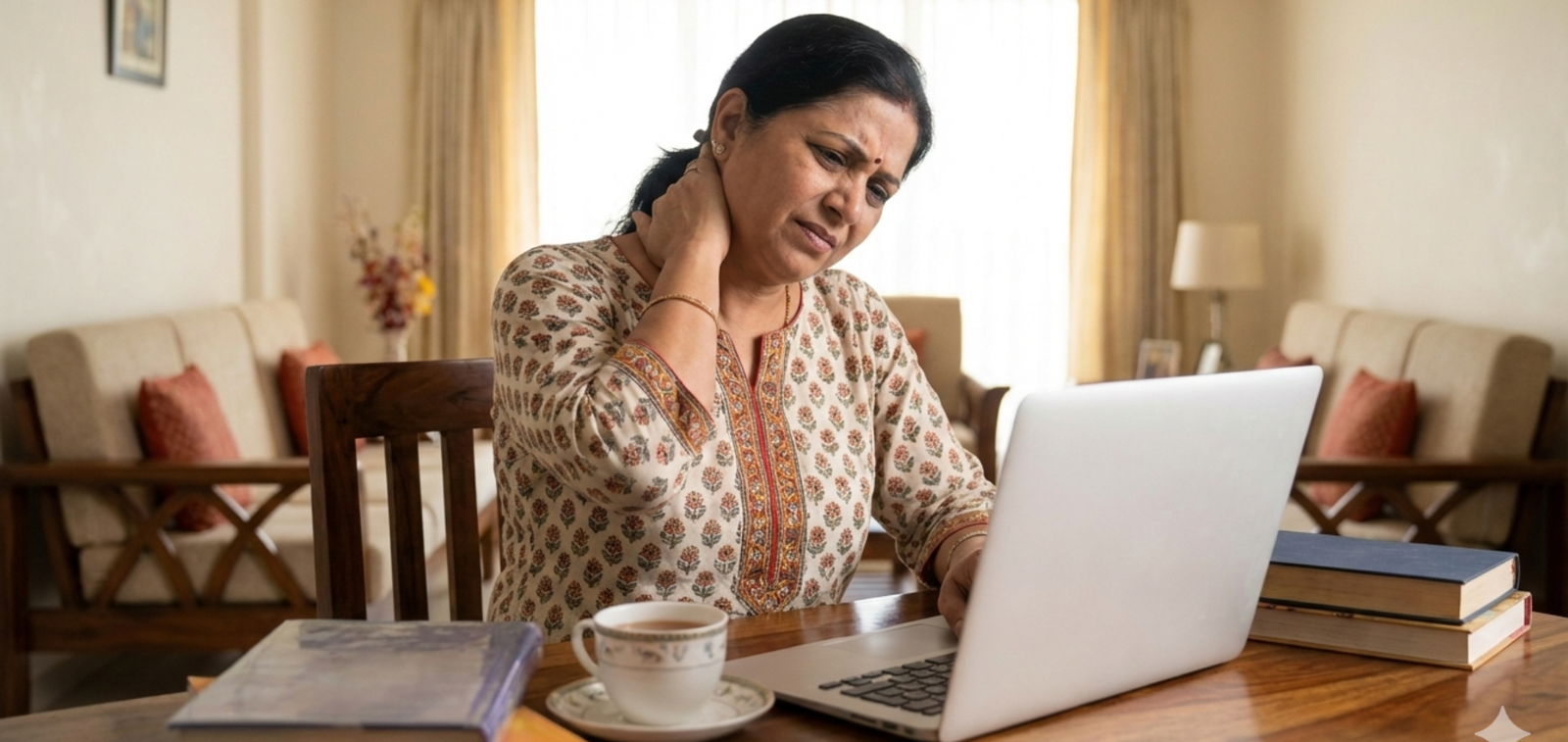
I hear this almost every day. There is a common myth that neck pain and spinal degeneration are reserved for the retired. But the reality in my OPD tells a different story. Today, women in their 30s and 40s are the fastest-growing group suffering from chronic neck pain.
If you think that stiff neck is just from "sleeping wrong" or "stress," you might be ignoring your spine's cry for help. Let’s talk about why modern women, especially here in India are facing a spine health crisis, and what we can do about it.
What is Cervical Spondylosis?
Put simply, Spondylosis is the "greying of the spine." Just as our hair turns grey and skin gets wrinkles, our spinal discs (the cushions between vertebrae) dry out and shrink over time. This brings the bones closer together, causing friction, bone spurs, and pinched nerves. While this process is natural, lifestyle is accelerating it. What used to happen at age 60 is now happening at age 35.
Why Women? The "Double Burden" on the Spine
In my practice here in Maharashtra, I see a specific pattern in why women suffer more than men. It often comes down to a combination of biology and the "double shift" of work and home.
- The "Kitchen Posture"
- The "Text Neck" Epidemic
- Biology and Bones
1. The "Kitchen Posture"
Many of my patients spend hours looking down chopping vegetables, rolling chapatis, or washing utensils. This constant forward flexion puts immense pressure on the cervical discs. Your head weighs about 5kg, but when you tilt it forward by 60 degrees (to look at a stove or sink), the pressure on your neck increases to 27kg.
2. The "Text Neck" Epidemic
Whether you are a professional working on a laptop or a homemaker catching up on WhatsApp, looking down at a screen is a disaster for the neck. We call this "Tech Neck." Doing this for hours every day reverses the natural curve of your spine.
3. Biology and Bones
Women have smaller muscle mass in the neck compared to men, offering less support to the spine. Additionally, after age 40 (perimenopause), dropping estrogen levels can affect bone density, making the spine more vulnerable to wear and tear.
Symptoms: It’s More Than Just Pain
How do you know if it's Spondylosis? Pain is the first sign, but look out for these others:
- Radiating Pain: Pain that travels from the neck down to the shoulder or arm.
- The "Heavy Head": A constant dull headache at the back of the skull (Cervicogenic Headache).
- Giddiness (Vertigo): Feeling dizzy when you turn your head quickly.
- Numbness: Tingling sensation in the fingers (often mistaken for Carpal Tunnel).
When Is It Serious? (Red Flags)
As a neurosurgeon, I always tell my patients: Pain is a nuisance, but weakness is an emergency.
You need to see a specialist immediately if you experience:
- Weakness in the hands: Dropping objects, unable to button a shirt, or mix dough.
- Imbalance: Feeling unsteady while walking, like you are walking on cotton or clouds.
- Electric Shock sensations: Sudden shocks running down your back or limbs.
These suggest Cervical Myelopathy where the spinal cord itself is being compressed. This is dangerous and often requires surgery to prevent permanent paralysis.